

Discover the top AI trends for startups in...
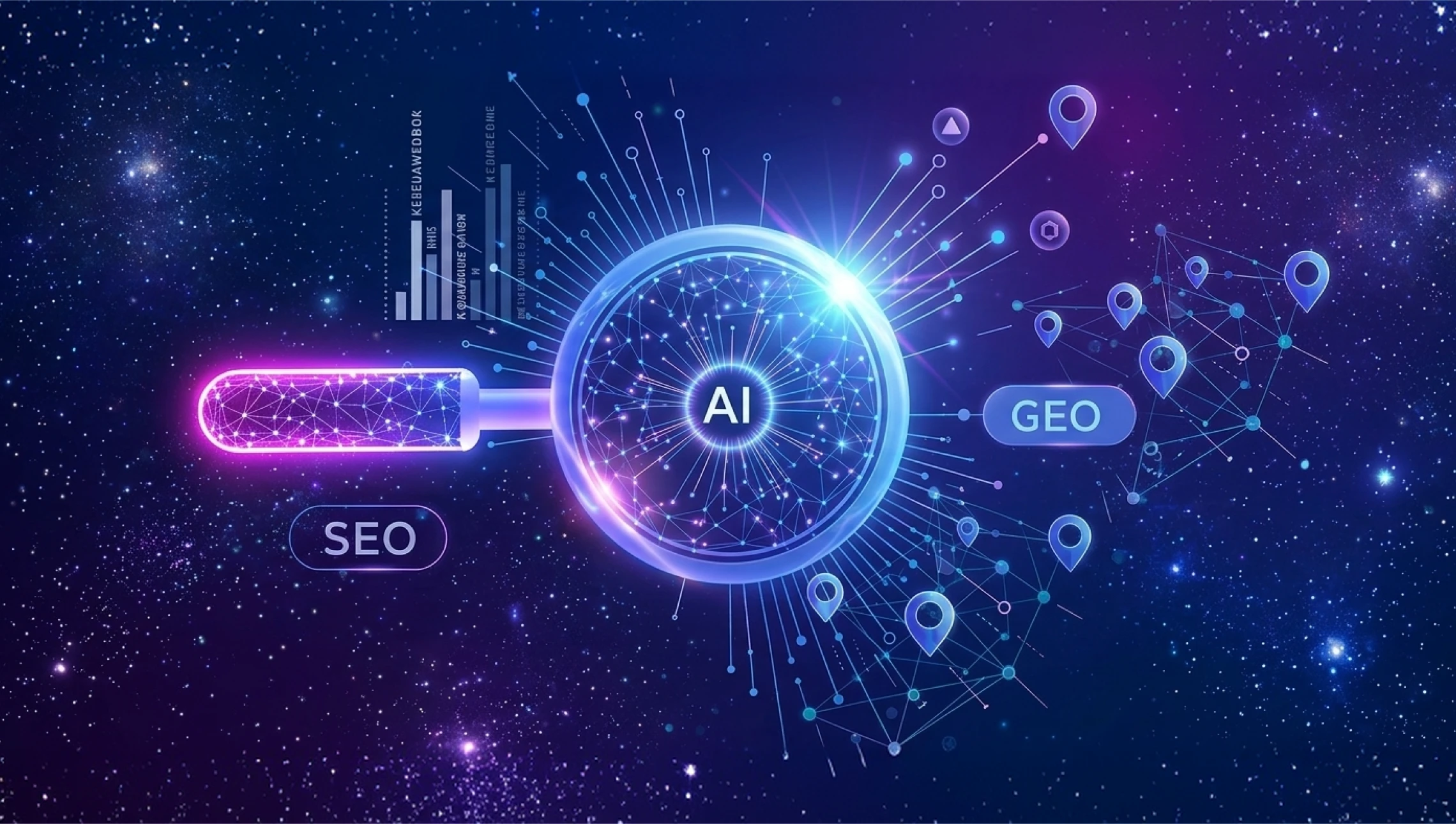
Search used to mean ten blue links and a ranking algorithm you could reverse-engineer with keywords and backlinks. That world hasn't disappeared, but a parallel one has grown up next to it: people asking AI engines a question and trusting the single answer that comes back. This is the world of Generative Engine Optimization (GEO) — the practice of shaping content so AI systems find it, trust it, and choose to cite or synthesize it.
The catch is that "AI search" isn't one thing. ChatGPT, Claude, Gemini, and Perplexity each pull information together in meaningfully different ways, weigh sources differently, and format answers differently. If you're optimizing for AI visibility, treating them as interchangeable is the fastest way to waste effort. Here's how each one actually works, and what that means for your content.
1. ChatGPT: Broad Retrieval Meets Conversational Memory
ChatGPT's answers are shaped by two forces: what it already "knows" from training, and what it retrieves live through browsing when a query needs current information. When browsing kicks in, it tends to favor pages that are structurally easy to parse — clear headings, direct answers near the top, and content that doesn't bury the point in throat-clearing.
ChatGPT also leans heavily on aggregated consensus. If five reputable sources agree on a fact and one contradicts it, the majority view tends to win. That means being the definitive, most-cited voice on a narrow topic often outperforms being the most creative one. Structured data (FAQs, comparison tables, step lists) gets pulled forward because it's cheap for the model to extract and repackage.
GEO Takeaway
Write in a way that answers the implied question in the first two sentences of a section, then elaborate. Use genuine structure — not decorative headers, but headers that map to real sub-questions a reader would ask.
2. Claude: Reasoning Over Retrieval, Trust Over Volume
Claude's approach to answering leans more on reasoning through the material it retrieves than on echoing whatever appears most frequently across the web. When Claude searches, it tends to weigh source quality and internal consistency heavily — a single well-argued, well-sourced piece can outweigh a dozen thin ones. It's also more willing to hold two sides of a debate in tension rather than flattening them into one confident answer, especially on contested topics.
This has a direct implication for GEO: content that overclaims, or that reads as manipulative ("the only guide you'll ever need," breathless superlatives) tends to get treated skeptically rather than rewarded. Claude responds better to content that reasons transparently — showing its logic, citing where numbers come from, and acknowledging limitations.
GEO Takeaway
Prioritize originality and evidentiary backing over repetition. A well-reasoned, source-cited piece with a clear point of view is more likely to be trusted and surfaced than a keyword-stuffed summary of what everyone else already said.
3. Gemini: Deep Integration With Google's Index and Knowledge Graph
Gemini doesn't operate in isolation — it's built on top of Google's existing web index and knowledge graph, which means classic SEO signals still matter more here than with the other engines. Domain authority, structured data markup (schema.org), entity recognition, and how well a page is already ranking in traditional search all feed into what Gemini surfaces.
Gemini also tends to be strong at connecting entities — people, companies, products, places — because that's what the knowledge graph was built for. Content that clearly defines what something is, who it's related to, and how it connects to other known entities tends to get pulled into Gemini's answers more reliably.
GEO Takeaway
Don't abandon technical SEO. Schema markup, clean entity definitions, and strong existing search rankings still function as trust signals here in a way they don't as directly for Claude or Perplexity.
4. Perplexity: Citation-First, Freshness-Obsessed
Perplexity was built around the idea that every claim should be traceable to a source, and that shapes its entire retrieval behavior. It actively favors recent content, diverse sourcing across an answer, and pages that make it easy to extract a clean, quotable claim. Because its interface visibly shows citations, Perplexity has a strong incentive to pick sources that look authoritative and current — dated content, named authors, and clear publication or update timestamps all help.
Perplexity also rewards content that's citable in a narrow sense: a single paragraph or sentence that states a fact or stat cleanly, without requiring the reader to piece it together from context. Listicles, data-backed claims, and original research or surveys tend to do well here specifically because they produce quotable units.
GEO Takeaway
Keep content dated and updated. Break out key facts, stats, and definitions into standalone sentences that could be lifted and cited without losing meaning.
5. The Common Thread: Extractability, Trust, and Structure
Across all four engines, three factors keep showing up regardless of the underlying architecture:
- Extractability — can the model easily pull a clean answer out of your content without doing a lot of inference?
- Trust signals — authorship, citations, consistency with other reputable sources, and freshness.
- Structure — real headers, direct answers, and organization that mirrors how someone would actually ask the question.
Engine-specific tactics matter at the margins, but content that's genuinely well-organized, well-sourced, and clearly written outperforms tricks in every one of these systems.
GEO for Agentic Search: Optimizing for AI That Acts, Not Just Answers
The next shift is already underway: agentic search, where AI systems don't just answer a question but take multi-step actions on a user's behalf — comparing products, booking things, filling forms, or chaining several searches together to complete a task. This changes what "visibility" means.
An agentic system doesn't just need to find your content; it needs to use it as part of a workflow. That means:
- Machine-readable clarity matters more than persuasive copy. An agent parsing a pricing page cares about structured, unambiguous data (plans, prices, limits) more than a compelling narrative.
- APIs and structured endpoints become part of GEO. If an agent can query your data directly rather than scrape a page, you have far more control over what it sees and how accurately it's represented.
- Consistency across your own properties is critical. An agent cross-referencing your site, your docs, and third-party mentions will flag — and may distrust — contradictions.
- Actionability signals help. Clear calls-to-action, well-labeled forms, and predictable page structures make it easier for an agent to complete a task using your content instead of a competitor's.
In short, agentic GEO is less about winning a citation and more about being the easiest, most reliable option for an AI to act on.
Why AI Engines Aren't the Same
AI engines aren't the same because each one can be built using different models, training data, system instructions, tools, and methods for processing information. Even when you ask the exact same question, different AI systems may interpret the context differently and generate different responses.
Some AI engines may rely mainly on their trained knowledge, while others can also use web search, databases, or external tools to retrieve information. Their response style, accuracy, level of detail, and reasoning can also vary based on how the system is designed. Understanding these differences helps explain why there is no single, identical AI response to every question.
FAQ: Generative Engine Optimization
Is GEO replacing SEO?
No — it's layering on top of it. Technical SEO fundamentals (site speed, indexability, schema) still matter, especially for engines like Gemini that are tied to a traditional search index.
Which engine should I optimize for first?
Start with whichever one your audience actually uses to research your category, then build outward. B2B and technical audiences skew toward Claude and Perplexity; broad consumer queries skew toward ChatGPT and Gemini.
Do citations actually drive traffic?
Sometimes, but not always — many AI answers satisfy the user's question without a click-through. Treat citations as a brand-trust and awareness signal, not a guaranteed traffic source.
How often should content be updated for GEO?
Regularly, especially for Perplexity, which weighs freshness heavily. Even a visible "last updated" date can help.
Can I game these systems with keyword stuffing?
Not effectively, and it risks the opposite outcome. All four engines increasingly detect and downweight low-substance, manipulative content in favor of clear, well-sourced writing.